Becoming a Reiki Master is a deeply personal and spiritual journey that transcends the physical techniques of healing. It’s about cultivating a profound connection to universal energy, embracing the principles of compassion and mindfulness, and stepping into a role of service and guidance. Whether you’re drawn to Reiki for self-healing, to support others, or to teach, this path offers endless opportunities for growth and transformation. As you begin this journey, remember that Reiki is not just a practice—it’s a way of living and being.
Steps to Become a Reiki Master
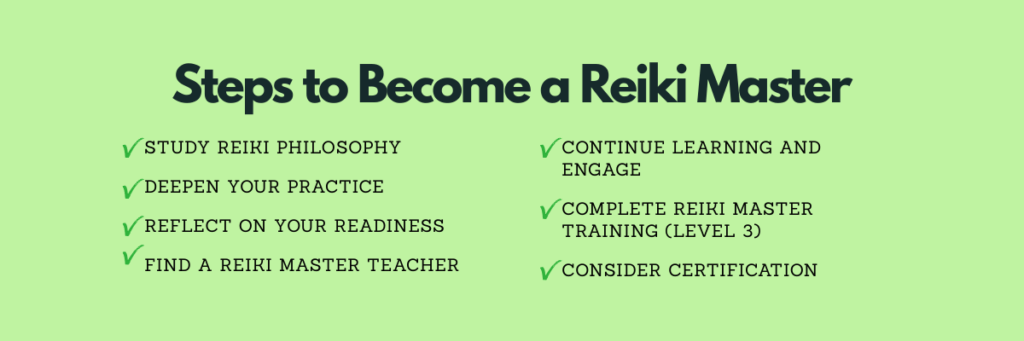
After completing Level 1 (Shoden) and Level 2 (Okuden) Reiki training to become a Reiki healer, you’re ready to take the next step on your Reiki journey: becoming a Reiki Master. This stage is about deepening your connection to Reiki energy, mastering advanced techniques, and, if you choose, learning how to teach and attune others. Below, we’ll guide you through the essential steps to achieve this level of mastery.
Study Reiki Philosophy
Before diving into the technical aspects of Reiki, it’s important to understand its core philosophy and principles. This step helps you cultivate the right mindset and spiritual foundation for your practice.
Part 1: Learn the Reiki Principles
The Reiki principles, also known as the Five Reiki Precepts, are:
- Just for today, I will not be angry.
- Just for today, I will not worry.
- Just for today, I will be grateful.
- Just for today, I will do my work honestly.
- Just for today, I will be kind to every living thing.
Part 2: Understand the Deeper Meaning
Reflect on how these principles can guide your daily life and Reiki practice.
For example:
- Letting go of anger and worry helps you maintain a calm and open heart, which is essential for channeling Reiki energy.
- Practicing gratitude and kindness aligns you with the universal energy of love and compassion.
Part 3: Live by the Principles
- Incorporate the Reiki principles into your daily routine.
- Use them as affirmations or mantras during meditation or self-healing sessions.
- Strive to embody these principles in your interactions with others and in your personal growth.
Deepen Your Practice
Before advancing to Reiki Master Level, it’s important to deepen your practice and gain experience.
Part 1: Daily Self-Healing
Continue practicing Reiki on yourself daily to strengthen your connection to the energy and maintain balance.
Part 2: Work on Others
Offer Reiki sessions to friends, family, or clients to gain more experience and confidence in your abilities.
Part 3: Meditate Regularly
Incorporate meditation to enhance your intuition and spiritual connection, which is essential for mastering Reiki.
Reflect on Your Readiness
Becoming a Reiki Master is not just about learning techniques; it’s about embodying the Reiki principles and living a life aligned with compassion, mindfulness, and healing.
Part 1: Assess Your Intentions
Ask yourself if you feel called to teach and guide others, as this is a key responsibility of a Reiki Master.
Part 2: Evaluate Your Commitment
Reflect on whether you’re ready to commit to the ongoing journey of learning, teaching, and spiritual growth.
Find a Reiki Master Teacher
To progress to Reiki Master Level, you’ll need a qualified Reiki Master Teacher to guide you through the training and attunement process.
Part 1: Look for a Qualified Teacher
- Ensure the teacher is reputable and has a lineage that traces back to Mikao Usui, the founder of Usui Reiki.
- Look for a teacher with experience and a teaching style that feels right for you.
- Ask about their training, experience, and what their Master Level course includes.
Part 2: Attend a Session or Workshop
Before committing, attend a session or workshop with the teacher to see if their energy and approach resonate with you.
Continue Learning and Engage
As you progress toward becoming a Reiki Master, it’s important to focus on expanding your knowledge and connecting with the Reiki community. This step prepares you for the deeper work ahead in your Reiki journey.
Part 1: Commit to Continued Learning
- Attend workshops, seminars, or retreats to learn advanced techniques or explore new perspectives.
- Read books on Reiki, energy healing, and related topics to broaden your understanding.
- Explore other healing modalities (e.g., crystal healing, sound therapy) to complement your Reiki practice.
Part 2: Engage with the Reiki Community
- Join Reiki circles or groups to share experiences and learn from others.
- Attend Reiki shares to practice and receive healing.
- Consider teaching or mentoring new practitioners to share your knowledge and deepen your understanding.
Complete Reiki Master Training (Level 3)
Reiki Master Level 3 is the final stage of formal Reiki training, where you deepen your connection to Reiki energy and learn advanced techniques for healing, teaching, and spiritual growth. Below is a breakdown of what this training involves:
Part 1: Receive the Reiki Master Attunement
Purpose: The attunement opens you to a higher level of Reiki energy, enhancing your ability to channel and work with this universal life force.
Process:
- Your Reiki Master Teacher will guide you through the attunement ceremony.
- The attunement connects you to the Reiki Master symbol (Dai Ko Myo) and amplifies your energy channels.
- You may experience a deep sense of peace, heightened intuition, or physical sensations as the energy flows through you.
Part 2: Learn the Reiki Master Symbol (Dai Ko Myo)
Symbol Meaning: Dai Ko Myo (大光明) translates to “Great Bright Light” and represents enlightenment, spiritual awakening, and the highest level of healing energy.
How to Draw It:
- Your teacher will show you the exact strokes and sequence for drawing the symbol.
- Practice drawing it until you feel confident in its form.
Uses of Dai Ko Myo:
- Strengthens healing energy during sessions.
- Clears deep-seated energy blockages.
- Enhances spiritual growth and self-healing.
- Used during attunements to pass Reiki energy to students.
Part 3: Master Advanced Healing Techniques
- Self-Healing: Use Dai Ko Myo in your daily self-healing practice to deepen your connection to Reiki and promote spiritual growth.
- Distance Healing: Expand your ability to send Reiki across time and space using the Hon Sha Ze Sho Nen symbol combined with Dai Ko Myo.
- Group Healing: Learn techniques to channel Reiki energy to multiple recipients simultaneously, such as in group meditations or healing circles.
Part 4: Learn How to Perform Attunements (Optional)
If you plan to teach Reiki, you’ll need to master the attunement process. Here’s how it works:
1. Preparation:
Cleanse the space, yourself, and the student’s energy using Reiki, smudging, or other cleansing methods.
Set a clear intention for the attunement.
2. Invocation:
Call upon Reiki energy, your Reiki guides, and spiritual helpers to assist in the process.
3. Use of Symbols:
Draw or visualize the Reiki symbols (Cho Ku Rei, Sei He Ki, Hon Sha Ze Sho Nen, and Dai Ko Myo) over the student’s energy centers.
4. Energy Flow:
Use hand positions and breathwork to direct the energy, opening the student’s energy pathways.
5. Closing:
Ground the student’s energy, seal their aura, and give thanks to Reiki and spiritual guides.
Part 5: Practice Self-Attunements
- Before performing attunements on others, practice self-attunements to understand the energy flow and build confidence.
- Create a calm, sacred space and focus on your intention to guide the energy smoothly.
Consider Certification
If you plan to teach or practice Reiki professionally, certification is essential. This step ensures you have the credentials to attune others and teach Reiki courses.
- Ensure your Reiki Master Teacher provides you with a certificate upon completing your Reiki Master Training (Level 3). The certificate should include your name, the teacher’s name, the lineage, and the date of completion.
- Certification validates your training and allows you to teach or practice professionally. It also gives your students and clients confidence in your qualifications.
- If you plan to teach, stay informed about any local or international requirements for Reiki practitioners. Consider joining professional Reiki organizations to enhance your credibility and access resources.
Resources for Reiki Master Training
Whether you prefer online learning or in-person training, there are many resources available to help you complete your Reiki Master journey. Below are some options to explore:
Online Reiki Master Courses
Online courses offer flexibility and convenience, especially if you want to learn at your own pace. Here are some popular choices:
Usui Reiki Master Teacher Online Course
- Offers training in all three levels of Usui Reiki.
- Accredited by the Reiki Healing Association.
- Flexible for both beginners and experienced practitioners.
Reiki Level I, II, and Master/Teacher Certification on Udemy
- Covers all Reiki levels with personalized distance attunements.
- Includes editable manuals for your practice and teaching.
Reiki Master Program Online Training by Learn Reiki
- Structured training with six video lessons.
- Begins with an orientation session.
Reiki Master Class Online by Mindful Mystic
- Self-paced learning with practical techniques.
- Leads to certification as a Reiki Master.
Certified Reiki Courses by The Reiki Guide
- Fully-accredited video training programs.
- Teaches advanced techniques and how to attune others.
In-Person Reiki Master Courses
If you prefer face-to-face learning, here are some ways to find in-person courses near you:
- Flowga Concept offers Reiki sessions and may provide Reiki Master courses.
- Paulo Nogueira Terapias offers Traditional Reiki courses, including Level III (Master), in various locations. Learn with Paulo Nogueira.
- Associação Portuguesa de Reiki (APR) lists associated Reiki schools in multiple regions. Explore their directory to find accredited courses near you. Check APR’s website.
- Search for local Reiki centers or holistic healing studios in your area, as many offer Reiki Master training programs.
- Check directories from reputable Reiki associations (e.g., the International Association of Reiki Professionals or local Reiki organizations) to find accredited courses and teachers.
- Look for Reiki Master workshops or retreats, which often provide immersive training experiences.
Reputable Reiki Associations
These organizations often provide directories of certified Reiki teachers, courses, and events:
- International Association of Reiki Professionals (IARP).
- The Reiki Alliance.
- K Reiki Federation.
- Canadian Reiki Association (CRA).
- Australian Reiki Connection (ARC).
Finding Reiki Master Workshops or Retreats
Here are some platforms and resources where you can find Reiki Master workshops or retreats:
Tips for Finding the Right Training
- Search Online: Use keywords like “Reiki Master workshop near me” or “Reiki retreat 2025” to find local or international options.
- Ask Your Reiki Teacher: If you’ve already trained in Reiki, your teacher may know of upcoming workshops or retreats.
- Join Reiki Communities: Online forums, Facebook groups, or local Reiki circles often share information about events.
Conclusion
The journey to becoming a Reiki Master is one of continuous learning, self-discovery, and spiritual expansion. It’s a path that invites you to embody the principles of Reiki in every aspect of your life, from your personal healing practice to your interactions with others. Whether you choose to teach, practice professionally, or simply deepen your connection to Reiki, this journey is a testament to the power of universal energy and the potential for healing within us all. May your path be guided by light, love, and the transformative energy of Reiki.